Round Rock Porta Pros pumps grease traps for restaurants, food trucks and commercial kitchens once fats, oils, grease and solids build up to 25 percent of the liquid depth in the interceptor, the same threshold septic tank warning signs covers for tanks. That threshold is the trigger point for service, and letting it slide past that risks a backup during your dinner rush.
Most kitchens need grease trap pumping on a monthly schedule, but volume matters more than the calendar. A high-volume fryer operation near a busy Round Rock corridor fills its interceptor faster than a small cafe running light grill service, and either type of kitchen can compare notes with how often to pump a septic tank for the tank side of the property. The rule that matters is simple: a grease interceptor gets pumped when fats, oils, grease and solids reach 25 percent of the liquid depth, and waiting past that point invites slow drains, odor complaints and a call for emergency septic service. If you are also managing a construction site kitchen or temporary food service, pair this with septic pumping service planning so nothing gets missed. Restaurants opening a second location, or a caterer running a mobile unit, should build grease trap pumping into the same schedule as septic tank cleaning for any onsite tank, and check porta potty rental cost if the site also needs temporary restrooms during buildout. Round Rock kitchens that skip a cycle usually find out the hard way, with a Saturday night clog instead of a routine visit.
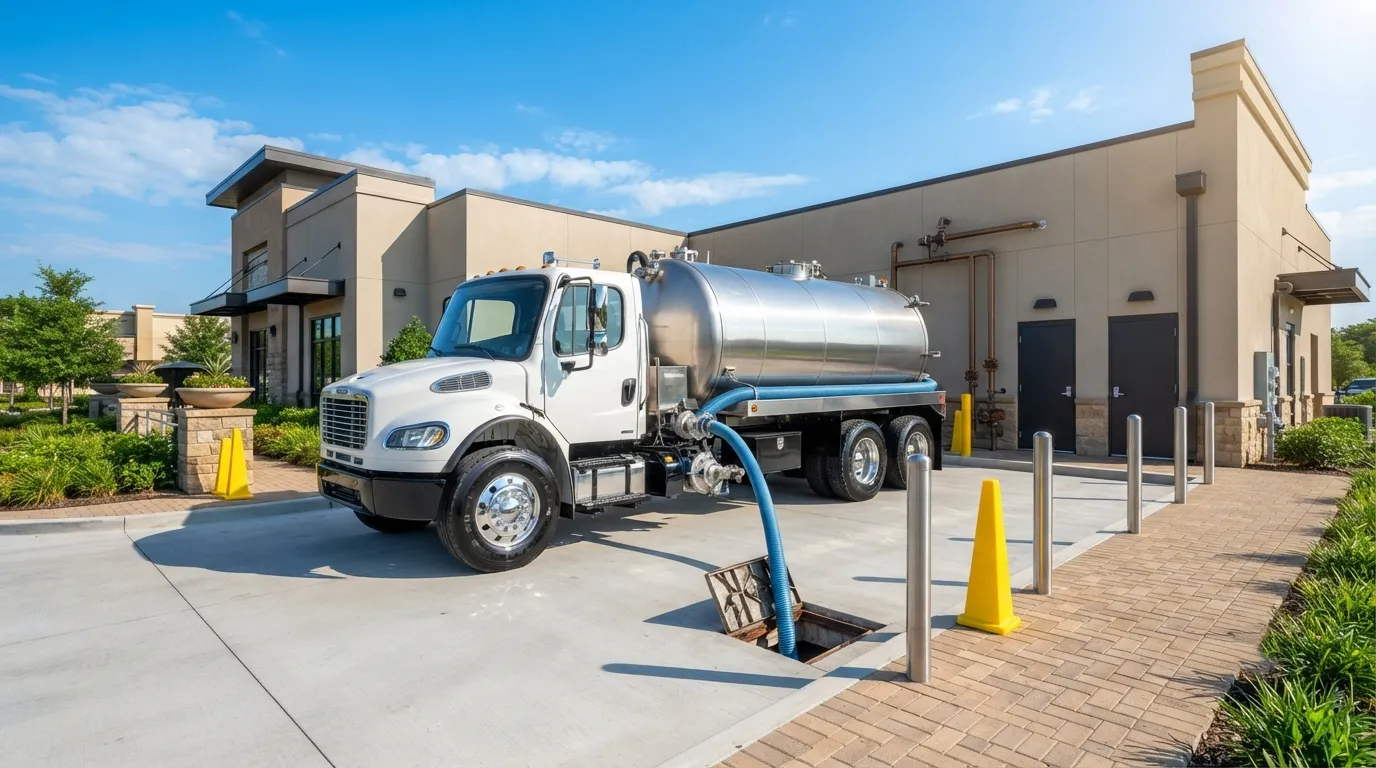
Grease trap pumping cost depends on trap size, access and whether it is a routine visit or an emergency call. Commercial grease trap pumping runs on the same general framework as septic work, and a standard service call falls in the range below, similar in structure to the tiers on dumpster rental cost for debris removal during a kitchen remodel. For exact numbers tied to tank size, see septic tank pumping cost.
| service | duration | low | typical | high |
|---|---|---|---|---|
| septic/grease service | day | 150 | 250 | 300 |
| septic/grease service | weekend | 50 | 100 | 150 |
Weekend emergency grease trap pumping runs toward the higher end of that band because it pulls a crew off a normal route, much like temporary fence cost climbs for rush jobs on a construction site. If your kitchen is also handling a renovation, ask about bundling with holding tank rental, a portable sink rental to keep handwashing compliant while plumbing is disrupted, a roll-off dumpster rental for demolition debris, and a temporary fence rental if the work area needs to stay closed off.
Yes. Round Rock Porta Pros runs emergency grease trap pumping for kitchens that hit capacity early or get a backup warning from staff. A grease trap that overflows during service is a health code problem and a mess, so same-day response matters more than a fixed schedule once you are past the 25 percent mark. Round Rock restaurants near Hutto, roughly 8.1 miles east, and Brushy Creek, about 6.9 miles west, are inside our normal response radius, so drive time rarely delays a call, and the same crews cover Wells Branch about 9.2 miles south. Crews carry the same vacuum equipment used for septic pumping service calls, so a grease trap and a septic tank on the same property can often be handled in one visit. If your facility also needs handwashing station rental during a plumbing shutdown, that gets scheduled alongside the pump-out, and a hand sanitizer station rental can cover the gap for front-of-house staff. For general sanitation planning on active job sites near a kitchen build-out, OSHA 1926.51(c) governs toilet counts, while handwashing after certain chemical work falls under a different standard entirely, so ask which applies to your crew.
Watch for slow drains, a sewage smell near the kitchen floor drain, or grease visibly rising near the trap lid, the kind of red flags listed on septic tank warning signs. Those are signs you are close to or past the 25 percent fill threshold. Do not wait for a full backup. Call for service the same week you notice the smell.
Yes, on properties that have both. A typical residential septic tank gets pumped every 3 to 5 years depending on tank size and household size, a very different rhythm from monthly grease service, but one crew visit can often cover both if scheduled together.
Permit and disposal rules vary by facility type and are not something to guess at. Confirm requirements with the city before your first scheduled pump-out, since local code may specify disposal documentation for commercial kitchens.
Trap sizing depends on flow rate, number of fixtures and meal volume, and that is a conversation for a plumber or your local inspector. Once installed, request a quote for a pumping schedule matched to your actual usage, and check our FAQ or contact page if you have questions about service areas like Cedar Park or Leander.
Yes. A grease trap targets fats, oils and grease specifically, while a septic tank handles wastewater and solids from the whole building. Both need regular service, but on different cycles, and both can be scheduled through septic pumping service.
Yes. Round Rock Porta Pros delivers grease trap pumping across Round Rock and the surrounding metro, with same-day and next-day drop-off available on most orders.
Pricing depends on the unit and how long you need it. See our cost breakdown and request a free quote for an exact figure.
Standard rentals include scheduled service — a pump-out, a clean, a restock and fresh deodorizer. Busy or hot-weather sites can be serviced more often.
Call now or request a free quote — clean units, on-time delivery, transparent pricing.